



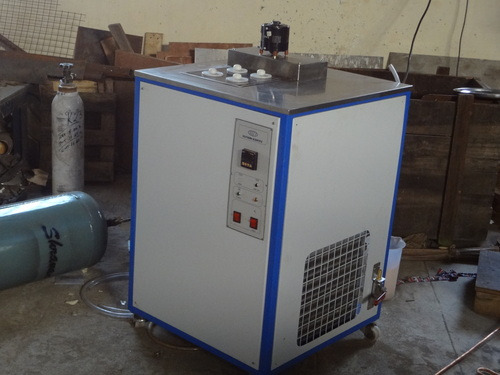
Cloud and Pour Point Apparatus
130000 INR/Piece
Product Details:
- Display Type Analog Thermometer
- Shape Rectangular Base, Cylindrical Test Jar
- Features Double Wall Insulation, Easy Sample Handling, Corrosion Resistant, Sample Test Jar Holder
- Accuracy 1C %
- Control Type Manual
- Power Supply Electric
- Glass Type Borosilicate Glass Cylinders
- Click to View more
X
Cloud and Pour Point Apparatus Price And Quantity
- 1 Piece
- 130000 INR/Piece
- Overheat protection
- -60C to +50C
- Double-layer with mineral wool
- Manual Stirring Rod provided
- ~5 Liters
- Conforms to ASTM D97 and D2500 methods
- 2
- Test jars, thermometer, manual stirring rod, bath
- Polished Stainless Steel
- Air/ice salt bath
Cloud and Pour Point Apparatus Product Specifications
- Analog Thermometer
- 220 V AC, 50 Hz Volt (v)
- Rectangular Base, Cylindrical Test Jar
- Double Wall Insulation, Easy Sample Handling, Corrosion Resistant, Sample Test Jar Holder
- Stainless Steel, Borosilicate Glass
- 1C %
- Electric
- Manual
- Determination of cloud and pour point of petroleum products
- Borosilicate Glass Cylinders
- Manual Analytical Device
- Cloud and Pour Point Apparatus
- 650 W Watt (w)
- 400 x 320 x 500 Millimeter (mm)
- Stainless Steel Base, Glass Test Jars
- Up to -60C
- Overheat protection
- -60C to +50C
- Double-layer with mineral wool
- Manual Stirring Rod provided
- ~5 Liters
- Conforms to ASTM D97 and D2500 methods
- 2
- Test jars, thermometer, manual stirring rod, bath
- Polished Stainless Steel
- Air/ice salt bath
Cloud and Pour Point Apparatus Trade Information
- 7 Days
Product Description
Cloud And Pour Point Apparatus
CLOUD POUR POINT APPARATUS is a highperformance laboratorygrade machine that is designed and developed by our skilled professionals using the latest technologies which ensure high working efficiency and quick results It is commonly used in the detection of flashing points of various test samples in chemical labs The test chamber of this unit is fabricated by using heavyduty materials that offer high strength and rigidity CLOUD POUR POINT APPARATUS offered by us is high in demand due to its high accuracy and repeatability Get this lab apparatus from us with an assurance of fast and safe delivery
Specification
Controlling accuracy 2C
Display accuracy 05 1 Digit and full scale
Material Stainless steel
Power Supply 230 Volts 50 Hz
Temperatures 0oC 17oC 34oC 51oC
Advanced Temperature Control for Accurate Results
This apparatus offers exceptional temperature control allowing samples to be cooled using either an air or icesalt ba th Its doublewall construction with mineral wool insulation maintains stable conditions ensuring reliable readings down to 60C The analog thermometer delivers accurate measurements over a wide range critical for cloud and pour point testing
Effortless Sample Handling and Durability
Engineered with a polished stainless steel base and borosilicate glass cylinders the apparatus guarantees corrosion resistance and longevity The rectangular base and cylindrical test jars facilitate easy sample processing A manual stirring rod and sample holder improve handling and testing efficiency making this unit ideal for routine laboratory procedures
Compliance and Safety Assured
Adhering strictly to ASTM D97 and D2500 methods this device provides dependable results for petroleum product analysis Integrated overheat protection safeguards both user and equipment while the accurate manual controls offer reliability without sacrificing safety All necessary accessories come included streamlining setup and operation
FAQs of Cloud and Pour Point Apparatus
Q How does the Cloud and Pour Point Apparatus determine cloud and pour points
A It uses manual sample preparation in borosilicate glass test jars cooled in a stainless steel ba th with air or icesalt The sample is observed visually using a thermometer range 60C to 50C for the temperature at which cloud or pour point occurs following ASTM D97 or D2500 methods
Q What are the main benefits of using this apparatus for petroleum analysis
A This device provides highly accurate 1C cloud and pour point results facilitated by robust insulation and corrosionresistant materials It delivers compliance with globally recognized standards for repeatability and reliability while integrated safety features protect users during operation
Q When should manual stirring be performed during testing
A Manual stirring with the provided rod is done as specified in ASTM D97 and D2500 procedures typically during sample cooling to ensure homogeneity and accurate temperature measurement
Q Where is the Cloud and Pour Point Apparatus suitable for use
A It is ideal for laboratories manufacturing units quality control centers exporters and service providers handling petroleum products especially where adherence to ASTM D97 or D2500 is required
Q What accessories are included with the apparatus
A The package comes complete with test jars borosilicate glass a manual stirring rod analog thermometer a polished stainless steel ba th and sample holders for convenient operation
Q How does overheat protection enhance safety during operation
A Overheat protection automatically prevents the device from exceeding safe temperature limits minimizing the risk of damage to samples or equipment and reducing operator hazardsespecially during prolonged operation
Q What is the process for testing two samples simultaneously
A Place each sample in a separate test jar then position both jars in the ba th Use the cooling system and manual stirring as required monitoring temperatures with the analog thermometer until cloud or pour points are observed and recorded
Tell us about your requirement

Price:
Quantity
Select Unit
- 50
- 100
- 200
- 250
- 500
- 1000+
Additional detail
Mobile number
Email


Contact Us

- No.12, Devi Nagar, Moolachattiram Main Road, Madhavarram Milk Colony, Chennai - 600051, Tamil Nadu, India
- Phone : 08045803973
SOUTHERN SCIENTIFIC LAB INSTRUMENTS PRIVATE LIMITED
GST : 33AAKCS1272K1Z8
GST : 33AAKCS1272K1Z8

- Mr Manikandan (Proprietor)
- Mobile : 08045803973
- Send Inquiry
- 12, Devi Nagar , Moolachattiram Main Road ,
Madhavaram Milk Colony , Chennai -600 051
 Send Inquiry
|


Our Products
- Humidity Chamber
- Thermal Shock Chamber
- Environmental Chamber
- Industrial Ovens
- Pathological Equipment
- Energy Saving Equipments
- Cloud & Pour Point Apparatus
- Thermal Cycling Chamber
- Climate Chamber
- Lab Incubators
- Temperature Baths
- Deep Freezer
- Temperature Cabinet
- Cryogenic Bath
- Industrial Chamber
- Laboratory Water Bath
- Sub Zero Treatment Chamber
- Cold Chamber
- Cold Storage Room
- Industrial Freeze Dryer
- Muffle Furnace
- Environmental Test Chamber
- Environmental Test Chamber manufacturer in India
- Lyophilizer manufacturer in India
- Freeze Dryer manufacturer in India
- Humidity Chamber manufacturer in India
- Hot & Cold Chamber manufacturer in India
- Temperature Chambers
- Scientific Instruments
- Laboratory Lyophilizer
- Industrial Lyophilizer
- Climatic Test Chamber manufacturer in India
 Send Inquiry
 Send SMS
SOUTHERN SCIENTIFIC LAB INSTRUMENTS PRIVATE LIMITED
All Rights Reserved.(Terms of Use)
Developed and Managed by Infocom Network Private Limited.
Developed and Managed by Infocom Network Private Limited.

